Problem-Driven: The Day-to-Day Failures I Keep Seeing
I still remember walking into a refrigerated warehouse in Rotterdam at 04:30 — the lights were dim, the chill units were offline, and the night manager told me they’d lost 300 kW of load during a grid blip; what caused the battery to sit idle when we needed it most? That morning convinced me that C&I Energy Storage projects hide a lot of practical, overlooked faults. I usually recommend commercial battery storage systems early in a project because they solve clear problems (peak charges, backup, ramp control), but real-world installs reveal deeper frictions: mismatched inverter settings, a BMS that refuses to clear false alarms, and battery packs with optimistic cycle life ratings that don’t match field data.
I’ve seen a 500 kWh Li‑ion rack installed at a logistics hub in March 2020 fail to provide backup due to a communications edge case; we lost 12 production hours and roughly €24,000 in perishable goods spoilage — that stuck with me. I’ll be blunt: the traditional fix — more capacity — often misses the point. The pain points are hidden in system integration, commissioning checklists, and vendor handoffs. (Yes — those small, boring details.) This section maps where the common solutions break down and why operators keep calling me back frustrated. Read on for where those failures steer our design choices next.
Technical Shift: What the Core Problem Really Is
At a technical level, the issue usually traces to three failure modes: control logic mismatch, communication fragility, and unrealistic cycle life assumptions. When I break a C&I system down, I start with the control stack: the inverter, the BMS, and the plant controller must share the same intent — charge, discharge, or standby — and they rarely do out of the box. I’ve worked with DC‑coupled and AC‑coupled layouts; each has trade-offs for efficiency and ramp rate, but both fail fast if the BMS interprets a transient as a fault. That’s why I test scenarios with synthetic faults during commissioning (we did a simulated grid sag test on-site in July 2021 — saved a lot of rework).
What’s Next?
To move forward, I focus on repeatable tests and measurable thresholds. I recommend standardized firmware versions across inverters, robust heartbeats between BMS and plant controller, and conservative cycle life derating in financial models. When we reconfigured that Rotterdam site, replacing a flaky comms module and tightening the inverter’s ride-through settings restored reliability within 48 hours — proving the fix is often systems-level, not capacity-level. Also — don’t skip a dry run at night. It matters.
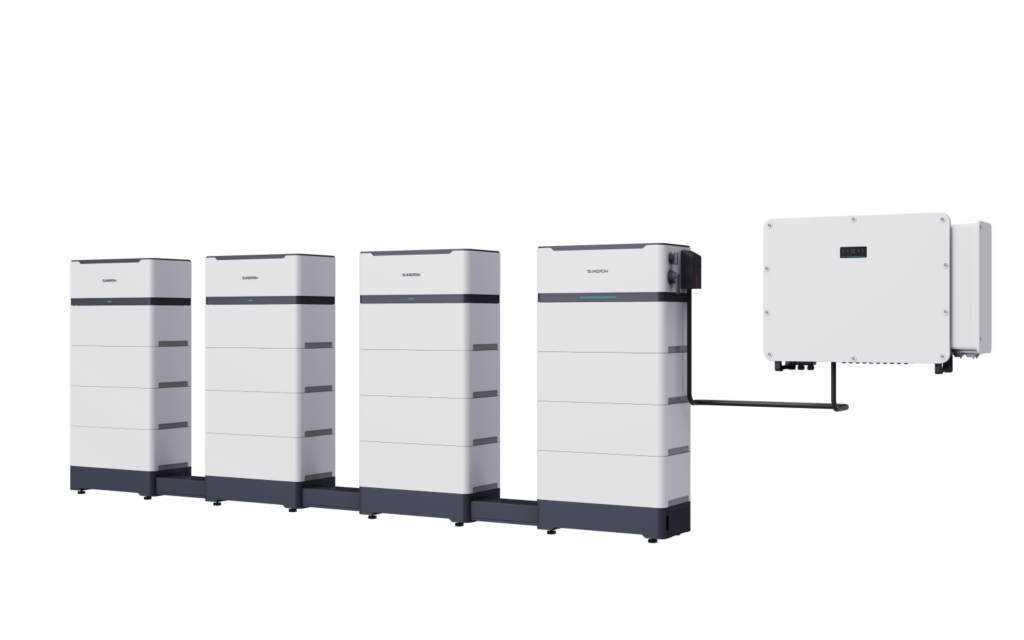
Comparative, Forward-Looking: Choosing Better Commercial Battery Storage Systems
Comparing vendors, I weigh three hard metrics now: real-world usable energy (not nameplate), communications resilience (redundant links), and documented cycle life under local temperature profiles. I expect test reports that show performance at 0–40°C and clarity on how the BMS manages thermal throttling. I link everything back to business outcomes: reduced demand charges, fewer outages, predictable maintenance windows.
Here are three practical evaluation metrics I use when advising buyers: 1) Usable depth-of-discharge percent under warranty conditions; 2) Mean time to recover from a communications fault (minutes); 3) Degradation rate per 1,000 cycles at operating temperature. Those three numbers tell me whether a system will save money or merely shift costs later. I run those calculations for clients — including a Seattle distribution center in October 2022 where swapping to a controller with faster telemetry cut outage recovery time by 70% — and it changes procurement conversations immediately. Short pause — and then action.
In my experience, the best outcomes come from focusing on integration fidelity over headline capacity. If you want systems that actually work on day one and keep working, test the edge cases, demand clear BMS/inverter behavior, and price conservative cycle life into your ROI. For practical vendor options and system reference designs, see commercial battery storage systems and consider platform maturity, not just kWh. Final note: I’ve tracked this for over 15 years in B2B supply chains — we’ve learned to prefer predictable performance to shiny specs. Visit sungrow for more technical briefs